


Hoi An ancient town is one of Vietnam’s famous tourist destinations, not only attracting tourists by its charming landscape but also by its unique culture, of which it is impossible not to mention the system of sacred pagodas. The pagoda in Hoi An are not only a place for local people to pray for peace and blessings, but also a stopping point for many tourists who want to learn about the unique spiritual culture of this land. Hoi An, with its rich history and cultural mix, has long been an important center of religion and belief. The pagodas here not only have spiritual value but are also symbols of harmony and interference between different cultures, from Vietnam, China to Japan. Each pagodas has its own story, a unique architectural feature and carries extremely profound values.
Learn About Architecture And Art At Sacred Pagodas in Hoi An
The pagodas in Hoi An are not only notable for their history and spiritual values but also for their Unique architecture and sophisticated decorative art.
Unique architectural style of pagodas in Hoi An: Pagoda architecture in Hoi An is the intersection of many different cultures, from traditional Vietnamese, Japanese to Chinese architecture. Each pagoda has its own mark, with curved tiled roofs, elaborately carved pillars and sophisticated decorative patterns.
Decorative art and sculpture at pagodas: Decorative art at pagodas in Hoi An often focuses on carved details on wood and stone, with images of dragons, phoenixes, lotus flowers, and gods. Buddha. The statues of Buddha, Arhat or deities in the pagodas are all crafted with high sophistication, reflecting the ingenuity of ancient artisans.
Influence of other cultures on pagoda architecture in Hoi An: Pagoda architecture in Hoi An not only bears bold Vietnamese traditions but also has clear influence from other cultures such as Japan and Chinese. This combination creates a unique architectural style, shown through details such as tiled roofs, pillars, and the arrangement of worship space.
Festivals and Spiritual Activities of Hoi An Pagoda
Sacred pagodas in Hoi An are places where many important festivals and spiritual activities take place, attracting not only local people but also tourists.
Buddha’s Birthday Festival and commemorative activities at the pagodas
Buddha’s Birthday Festival, which takes place in the fourth lunar month every year, is one of the most important events at pagodas in Hoi An. During this festival, pagodas organize incense offering ceremonies, offerings, and activities such as carrying Buddha palanquins and releasing lanterns, attracting thousands of Buddhists and tourists to attend.
Annual rituals to pray for peace and death
Every year, pagodas in Hoi An organize peace and requiem rituals to pray for peace in the country and people, and for the souls of the deceased to be saved. These rituals often take place on occasions such as the full moon day of January and the 7th lunar month (Vu Lan), and attract many attendees.
The role of pagodas in major holidays such as Lunar New Year
During the Lunar New Year, pagodas in Hoi An are always crowded with people coming to offer incense and pray for a peaceful and happy new year. This is also the time when pagodas organize many activities such as the first pagoda ceremony of the year, fortune giving, and early spring fortune picking, bringing a cheerful and warm atmosphere to people and tourists.
Spiritual meaning and feng shui at pagodas
The pagodas in Hoi An are not only places of worship but also have important feng shui meanings, affecting the lives and destiny of local people.
Location and feng shui significance of pagodas in Hoi An: Many pagodas in Hoi An are built in prime locations according to feng shui, with solid ground, facing rivers or mountains. This not only creates a beautiful landscape but also brings peace and prosperity to the community.
Spiritual meaning of each pagodas to local people: Each pagodas in Hoi An has its own story, its own spiritual meaning, associated with the lives of local people. For example, Cau Pagoda is seen by people as a place to pray for peace and relief from disasters, while Ong Pagoda is a place where Chinese people come to pray for fortune and a successful career.
Symbols and myths related to pagodas in Hoi An: Many pagodas in Hoi An are also associated with legends and myths about gods and important historical events. Symbols such as dragons, phoenixes, and lotus flowers often appear in pagodas architecture, meaning protection, longevity, and development.
Explore The Ancient And Most Sacred Pagodas in Hoi An
Covered Bridge – Symbol of Hoi An ancient town
- Address: 186 Tran Phu, Minh An Ward, Hoi An, Quang Nam, Vietnam
- Covered Bridge is located in the walking street area so it will be open for visiting at two hours:
- Morning: 9:00 a.m. – 11:00 a.m
- Afternoon: 15:00 – 22:00
- The above time frame is for you to visit inside. If you want to check-in outside, you can go to Chua Cau at any time.
- Sightseeing ticket price (applicable when you want to go inside to pray and visit):
- Ticket price for Vietnamese guests: 80,000 VND/person
- Ticket price for international guests: 120,000 VND/person
Covered Bridge is an indispensable symbol when mentioning Hoi An. Let’s explore the unique beauty of this pagoda.
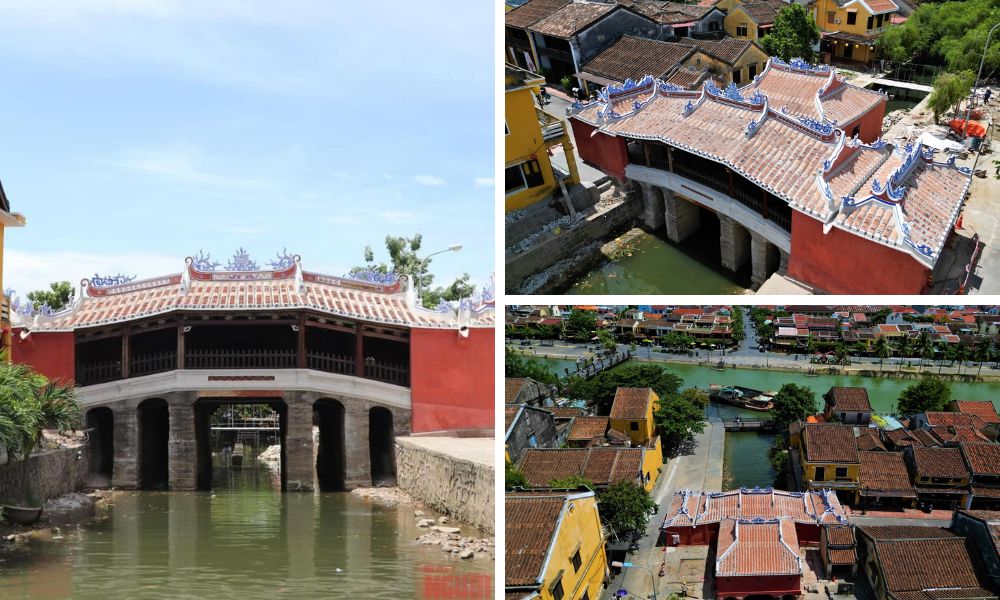
Figure 1. Covered Bridge (Chua Cau)
Covered Bridge (Chua Cau) also known as Japanese Bridge or Lai Vien Kieu, is an ancient bridge located in the ancient town of Hoi An, Quang Nam province. This pagoda is not only a unique architectural work but also imbued with the history and culture of the Central region.
History of formation: Built in the 17th century by Japanese merchants, Covered Bridge is the result of cultural interference between Vietnam and Japan. The unique architecture of the bridge pagoda is a harmonious combination of Japanese and Vietnamese styles, creating a beauty that is both familiar and strange.
Unique architecture:
- Roof: The pagoda’s roof is covered with yin and yang tiles, a traditional Vietnamese tile style.
- Stairs: The stairs leading up to the pagoda are made of wood, creating a cozy and close feeling.
- Statue of God: On the roof of the pagoda there is a statue of God, a god worshiped by Vietnamese people.
- Color: Covered Bridge is painted bright yellow, standing out against the blue sky.
Cultural significance: Covered Bridge is not only an architectural work but also a symbol of cultural exchange between peoples. This pagoda has become a must-see destination for tourists when coming to Hoi An.
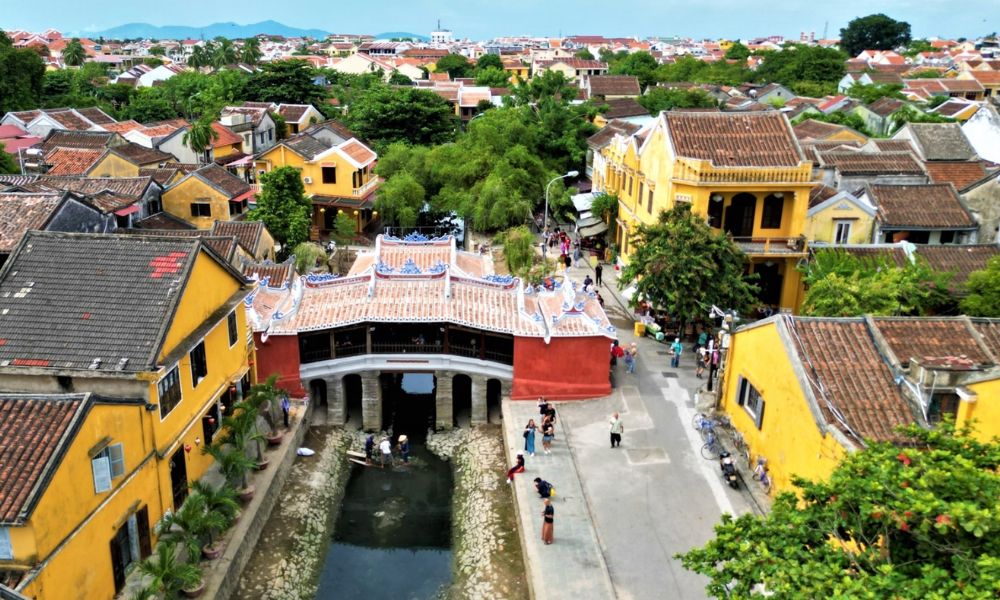
Figure 2. Hoi An Covered Bridge viewed from above
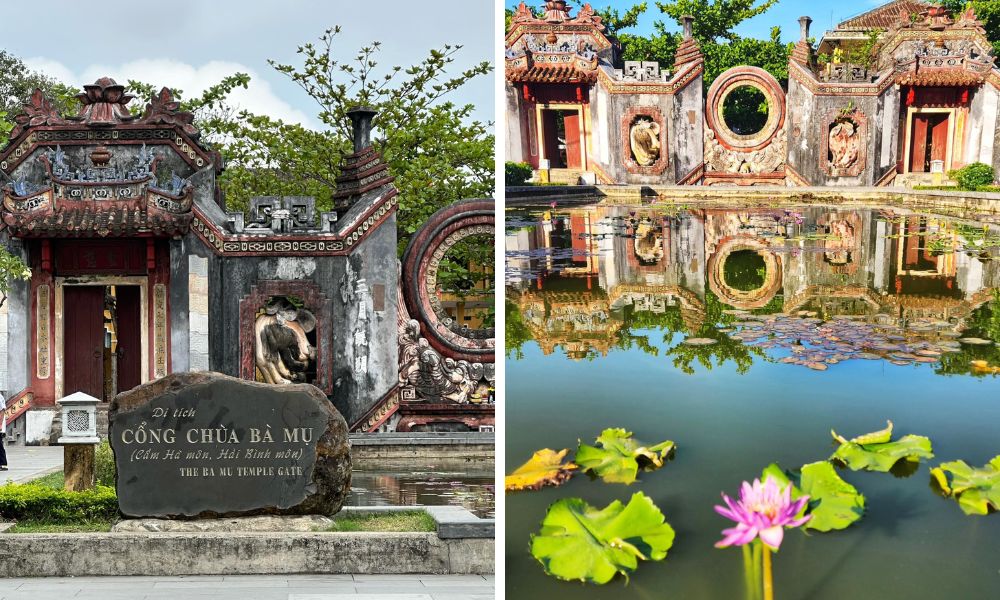
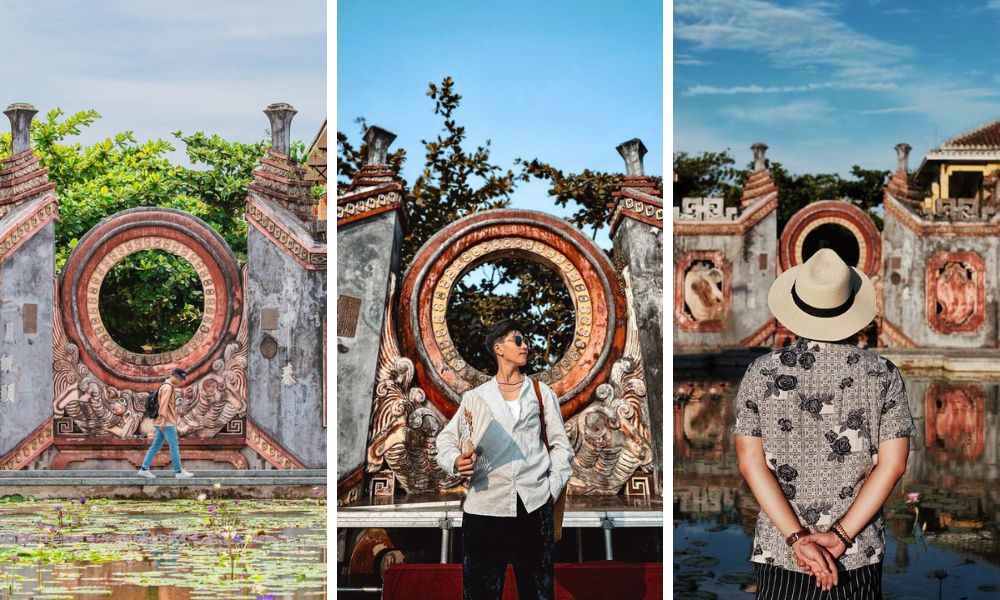

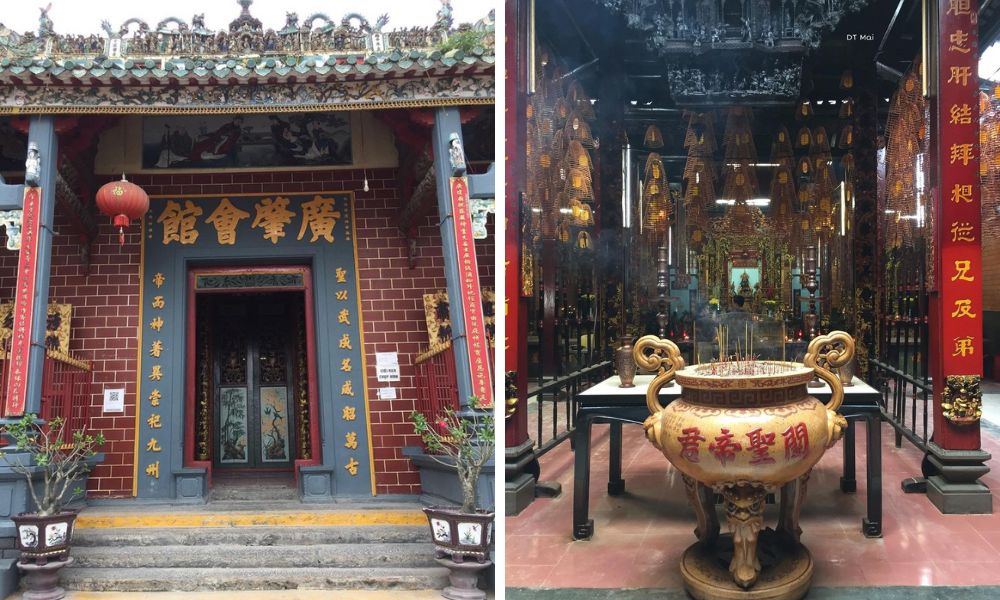
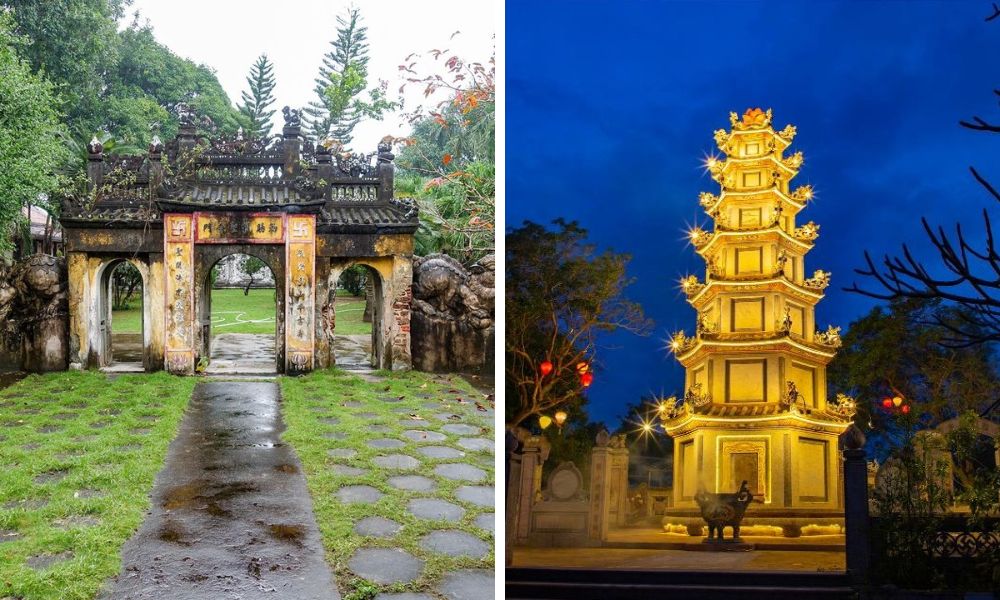
Figure 6. Chuc Thanh Pagoda
History of formation and development: Built around the 17th century by Zen Master Minh Hai, Chuc Thanh Pagoda is not only a unique architectural work but also the birthplace of the Chuc Thanh Zen sect of the Lam Te sect. . Through many ups and downs of history, the pagoda still retains its ancient features and profound cultural value.
Unique architecture: The architecture of Chuc Thanh Pagoda is a harmonious combination of Vietnamese and Chinese styles. The pagoda is built of wood, the roof is covered with yin and yang tiles, creating a pure space and close to nature. The paintings, couplets and Buddha statues are exquisitely carved, imbued with Buddhist culture. In particular, the pagoda also owns an extremely valuable collection of ancient Buddha statues.
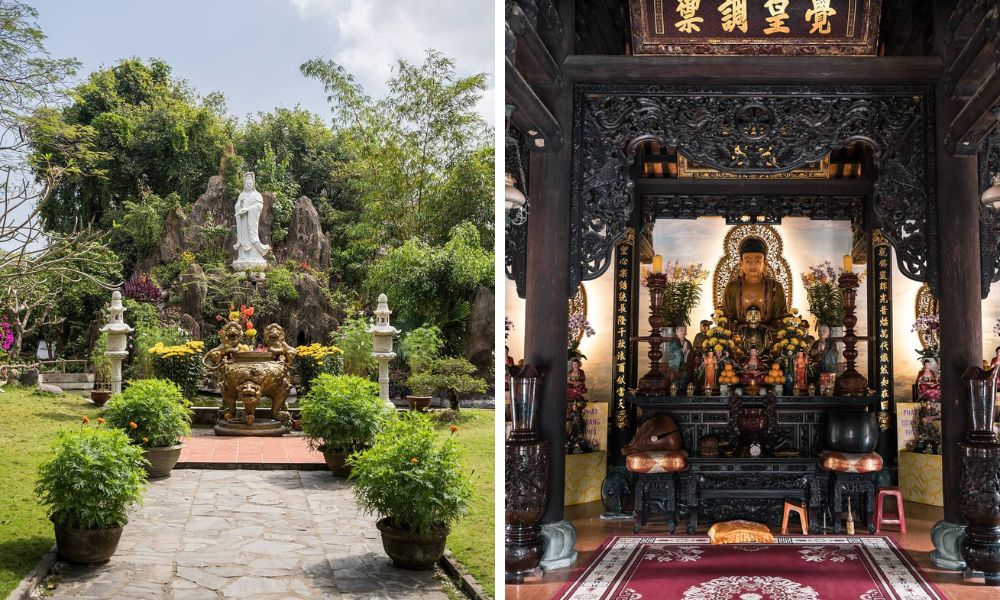
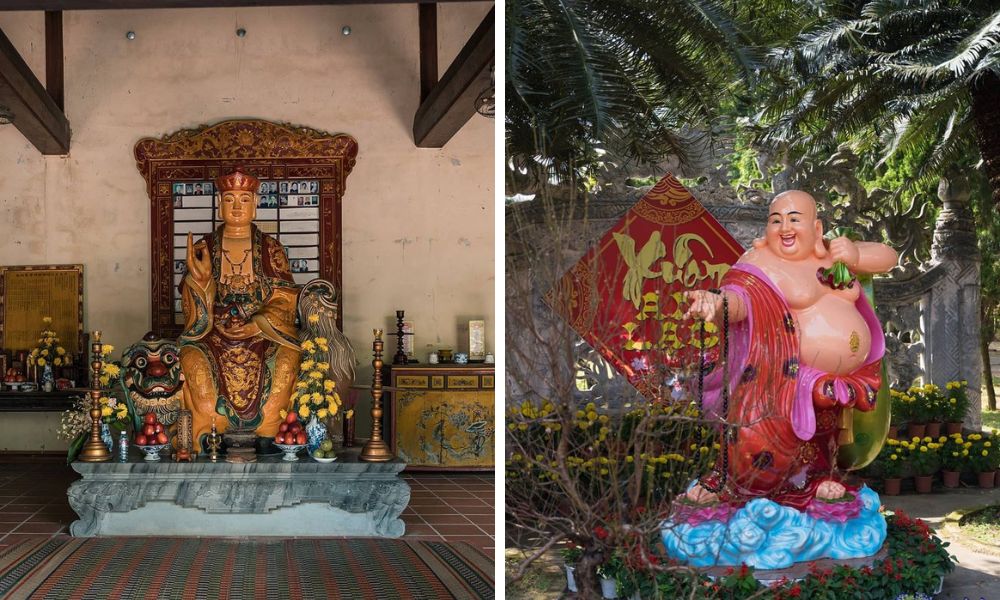
Figure 7. Inside Chuc Thanh Pagoda
Spiritual significance: Chuc Thanh Pagoda is not only a place for locals and tourists to pray, but also a Buddhist cultural center. Here, you can participate in Buddhist worship activities, listen to sermons, or simply find a quiet place to calm down.
Interesting things when coming to Chuc Thanh Pagoda
- Explore ancient architecture: Admire ancient wooden houses, exquisite carvings and majestic Buddha statues.
- Learn about Buddhist history and culture: Listen to monks tell about the history of formation and development of the pagoda, as well as learn about Buddhist cultural values.
- Participate in Buddhist ceremony activities: Feel the solemn and pure atmosphere during Buddha ceremonies.
- Find a quiet place to calm down: Escape from the noise of the city and find peace in your soul.
Chuc Thanh Pagoda is a destination not to be missed when you come to Hoi An. Come here to explore ancient beauty, learn about Buddhist culture and enjoy the pure space.
Phap Bao Pagoda – A peaceful, peaceful place in the heart of Hoi An ancient town
- Address: V8HG+CPQ, D. Phan Chu Trinh, Minh An Ward, Hoi An, Quang Nam, Vietnam
- Opening hours: Open all day
Phap Bao Pagoda is located right on Phan Chu Trinh street leading to Hoi An ancient town. This pagoda is not only famous for its size but also impresses with its unique architecture of the Northern sect.
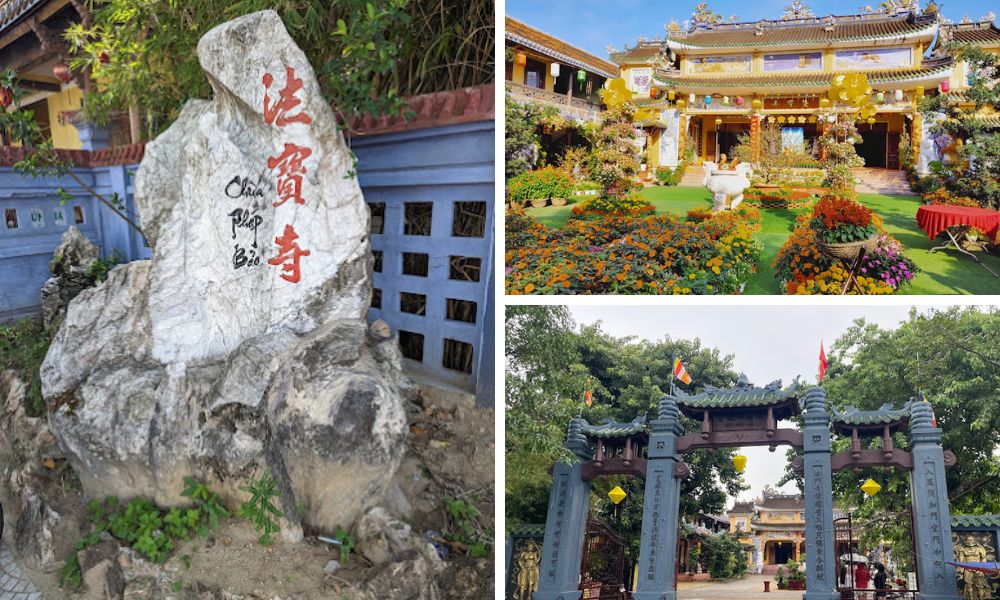
Figure 8. Phap Bao Pagoda
History of formation and development
- 1980s: Phap Bao Pagoda was established in a temporary house in Lakemba.
- 1981: The pagoda officially took the name Phap Bao.
- Change of location: Due to the initial location being unsuitable, the pagoda has moved to its current location.
Unique architecture and sacred space
- Architecture: Phap Bao Pagoda possesses the typical architecture of ancient houses in Hoi An, with two floors designed in harmony and sophistication.
- Space: The pagoda has spacious grounds and green landscape, creating a quiet and peaceful space.
- Main items: The pagoda has main items such as: main hall, ancestral house, guest house, meditation garden…
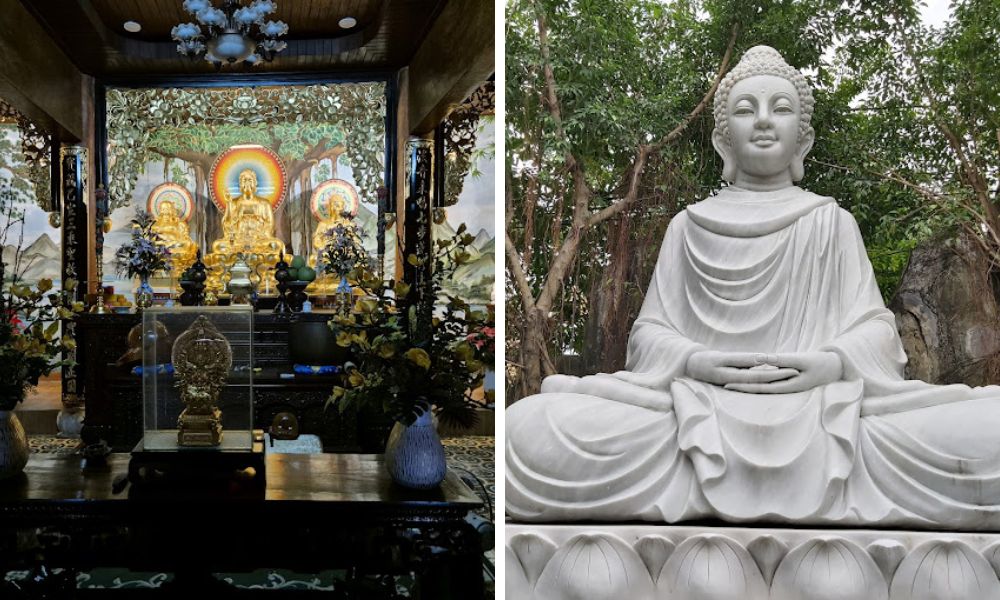
Figure 9. Inside Phap Bao Pagoda
Spiritual and cultural significance
- Buddhist activity center: Phap Bao Pagoda is a place of spiritual activities for local Buddhists and tourists.
- Preserving cultural values: The pagoda contributes to preserving and promoting the traditional cultural values of the Vietnamese people.
- Attractive tourist destination: The pagoda attracts many tourists because of its architectural beauty, peaceful space and spiritual significance.
Experience when visiting Phap Bao Pagoda
- Suitable time: You can go to the pagoda at any time of the year, but you should avoid major holidays to avoid crowds.
- Attire: You should wear polite, discreet clothing when entering the pagoda.
- Offerings: If you want to offer an offering, you can prepare fruits, candies or gold coins.
- Note: You should maintain general hygiene, speak softly and respect the sacred space of the pagoda.
Phap Bao Pagoda Hoi An is not only a pagoda but also an attractive cultural destination. If you have the opportunity to come to Hoi An, do not miss the opportunity to visit this pagoda to explore the architectural beauty, learn about Buddhist culture and enjoy the peaceful space.
Phuoc Lam Pagoda – An ancient pagoda over 200 years old in Hoi An
- Address: V8RF+XC9, Le Hong Phong, Cam Ha, Hoi An, Quang Nam, Vietnam
- Opening hours: 07:30 – 21:30
Phuoc Lam Pagoda is located in Thanh Ha commune, Cam Ha ward, Hoi An city, Quang Nam province. With an age of more than 200 years, this pagoda has become one of the spiritual and cultural destinations that attracts tourists when coming to Hoi An ancient town.
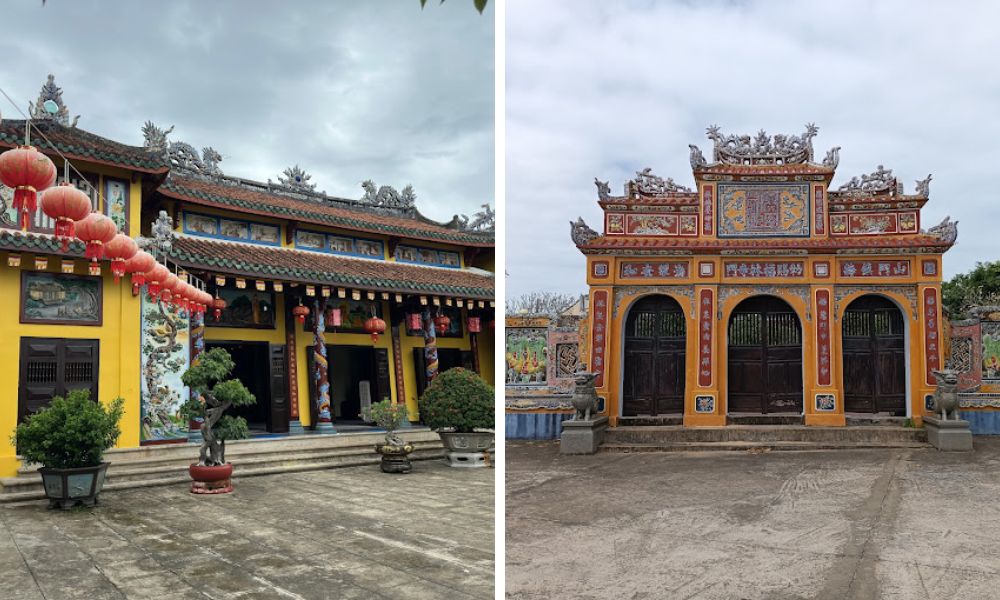
Figure 10. Phuoc Lam Pagoda
History of formation: The pagoda was built in the mid-17th century and is associated with many interesting historical anecdotes. Over time, the pagoda has undergone many restorations and repairs but still retains its unique architecture and original cultural value.
Unique architecture: Phuoc Lam Pagoda possesses the typical architecture of Vietnamese pagodas, with soft lines, harmonious with nature. The pagoda is located on a high land, with its back leaning against a large sand hill, in front of a large cool lake, creating a pure and peaceful space.
Cultural and spiritual values
- One of the oldest pagodas in Hoi An: Phuoc Lam Pagoda is considered one of the oldest pagodas in Hoi An, imbued with the history and culture of this land.
- A place to store many precious artifacts: In the pagoda, there are also many precious artifacts such as Buddha statues, ancient scriptures… of high historical and artistic value.
- Center of cultural and religious activities of the people: Phuoc Lam Pagoda is not only a place of worship but also a place of cultural and religious activities of local people and tourists.
Activities at the pagoda
- Burn incense to pray for peace: Visitors can go to the pagoda to burn incense and pray for peace for their family and themselves.
- Explore ancient architecture: Visit and explore the unique architectural features of the pagoda.
- Learn about Buddhist culture: Learn about Vietnamese Buddhist history and culture.
Phuoc Lam Pagoda is a destination not to be missed when you come to Hoi An. Take the time to visit this pagoda to feel the ancient beauty and learn about the culture and history of Quang Nam.
Vien Giac Pagoda
- Address: 48 Hung Vuong, Cam Pho Ward, Hoi An, Quang Nam, Vietnam
- Opening hours: 06:30 – 17:00
Located at 48 Hung Vuong Street, Cam Pho Ward, Hoi An, Vien Giac Pagoda is one of the most ancient and sacred pagodas in the city. This pagoda is not only a place for local people to pray but also an attractive destination for tourists from all over.
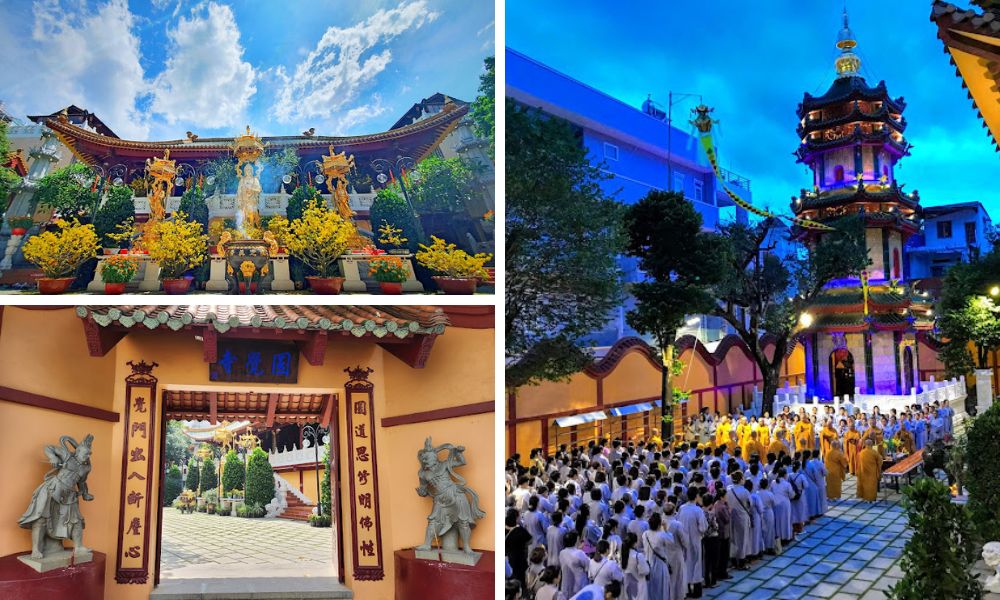
Figure 11. Vien Giac Pagoda
History of formation and development
- Origin: Vien Giac Pagoda was originally called Cam Ly Pagoda, a village pagoda.
- Relocation: In the year Thieu Tri 1841, due to a landslide in the old location, the pagoda was relocated to its current location.
- Restoration: The pagoda has undergone many restorations, the most recent being in 1990 under the direction of Venerable Thich Long Tri.
Unique architecture: Vien Giac Pagoda was built in the style of ancient Vietnamese pagoda architecture, bearing bold characteristics of Quang Nam region. The pagoda harmonizes the two styles of worshiping Vietnamese and Chinese Buddhism, creating a space that is both ancient, solemn and rustic and close.
Cultural and spiritual values
- Religious center: Vien Giac Pagoda is a place of spiritual activities for local people and a place to organize traditional festivals.
- Cultural preservation: The pagoda is an indispensable part of Hoi An’s cultural picture, contributing to preserving traditional values.
Interesting things when coming to Vien Giac Pagoda
- Explore architecture: Admire the sophisticated and unique architectural lines of the pagoda.
- Learn about culture: Learn about the history, culture and customs of the local people.
- Experience a quiet space: Relax, calm down and enjoy the peaceful space of the pagoda.
Vien Giac Pagoda is a destination not to be missed when you come to Hoi An. The pagoda is not only a unique architectural work but also a place that preserves profound cultural and spiritual values.
Van Duc Pagoda – Hoi An’s famous ancient pagoda preserves many precious artifacts
- Address: W83C+RPV, Cam Ha, Hoi An, Quang Nam, Vietnam
- Opening hours: 06:30 – 17:00
- Contact phone number: 02353861054
The pagoda is about 4.5km from the center of Hoi An ancient town, located in Dong Na village, Cam Ha commune, Hoi An. Van Duc Pagoda is also known by other names such as Lang Tho Tu or Cay Cau Pagoda. This pagoda was built in the late 17th century by Patriarch Minh Luong Nguyet An, one of the monks with great influence on Buddhism in Hoi An.
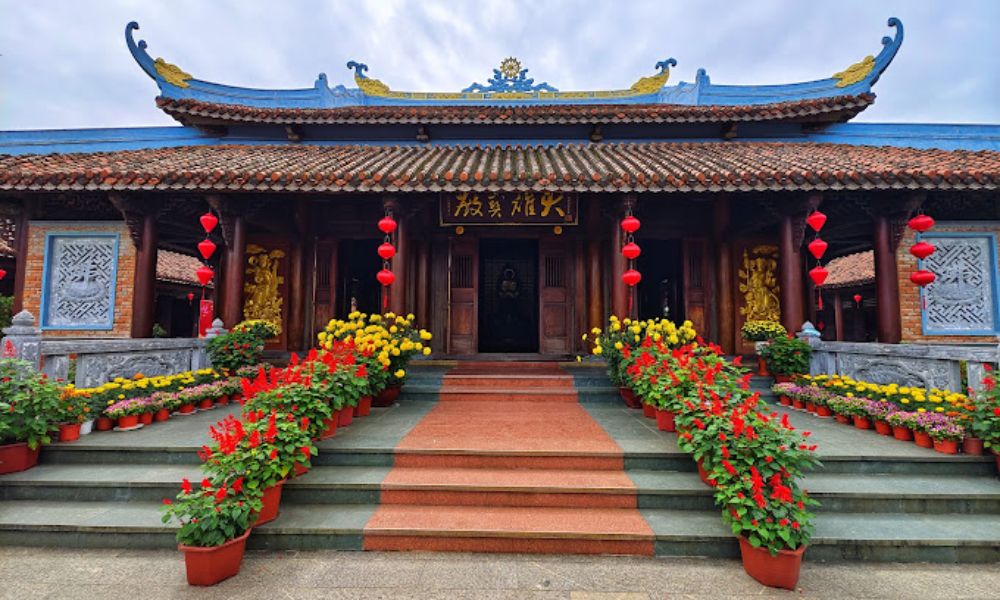
Figure 12. Van Duc Pagoda
History of Formation and Development
- 17th century: The pagoda was built simply with bamboo.
- First half of the 18th century: The pagoda was rebuilt with lime and bricks.
- At the end of the 18th century: The pagoda was greatly restored and many additional works were built.
- Early twentieth century: The pagoda was restored for the last time and retains its original architecture to this day.
Unique Architecture: Van Duc Pagoda possesses the typical architecture of ancient Vietnamese pagodas, with soft lines, in harmony with nature. The pagoda faces southwest, surrounded by a large campus with many green trees.
Historical and Cultural Value
- National historical relic: Van Duc Pagoda was recognized as a national historical relic in 1991, affirming the cultural and historical value of the pagoda.
- Hoi An Buddhist Center: The pagoda is a place of religious activities of the Lam Te Chuc Thanh sect, playing an important role in the spiritual life of Hoi An people.
- Preserving many precious artifacts: The pagoda preserves many valuable artifacts such as wooden carvings, Buddha statues, bells, tureens…
Other Interesting Things
- Spring at the ancestral pagoda: Every Lunar New Year, Van Duc Pagoda organizes many cultural and religious activities that attract a large number of Buddhists and tourists.
- Peace retreat: The pagoda regularly organizes short retreats for Buddhists, helping people find peace of mind.
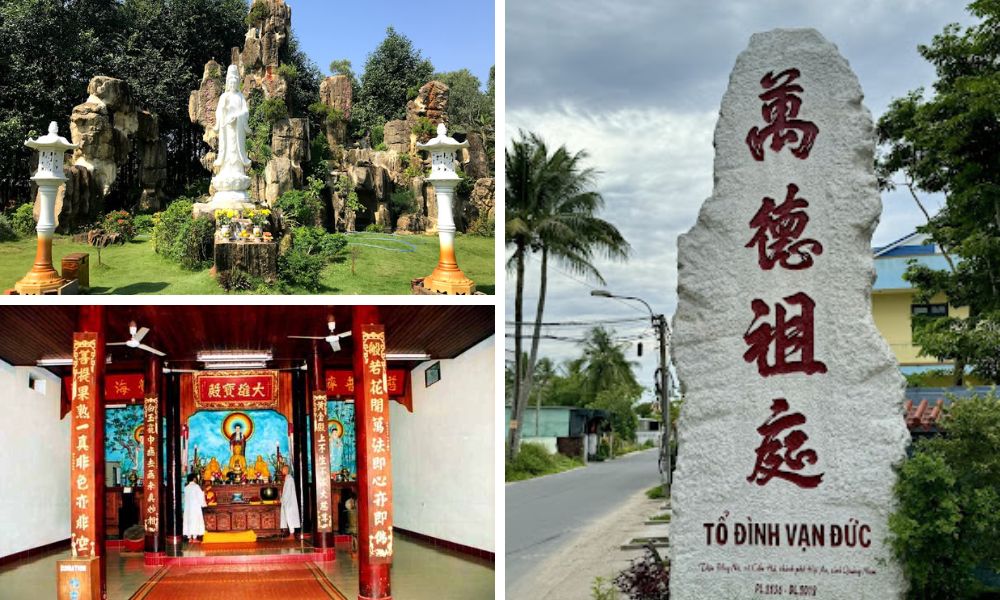
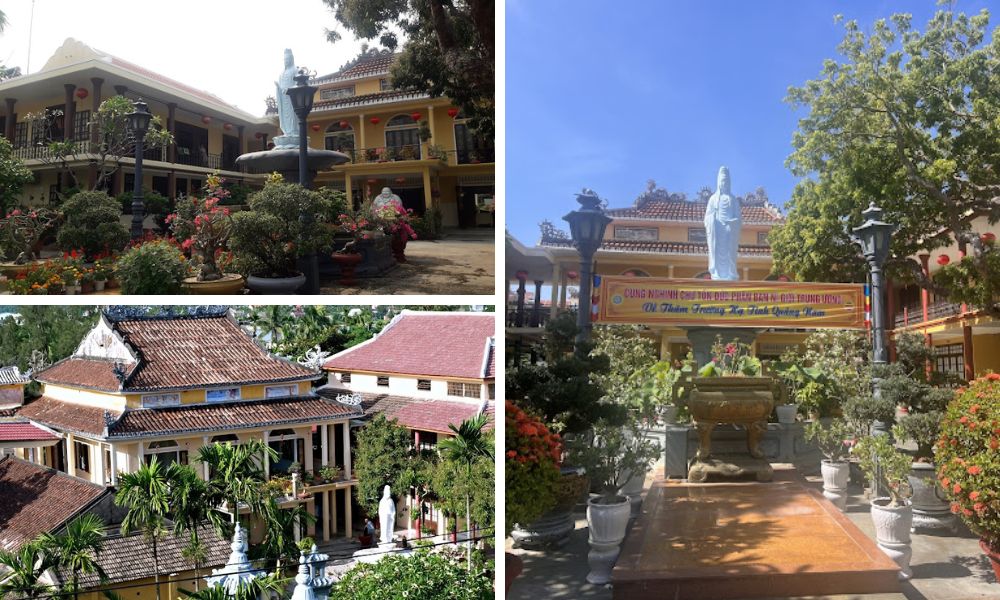
History and Meaning:
- Origin: Bao Thang Pagoda has a long history, associated with the development of Buddhism in Hoi An. The pagoda has undergone many restorations and expansions, but still retains the typical architectural features of the ancient period.
- Meaning of the name: The name “Bao Thang” has a profound meaning, expressing the protection and victory of Buddhism.
Unique Architecture: Bao Thang Pagoda possesses a unique architecture, harmoniously combining traditional and modern elements.
- Tam Quan Gate: The entrance gate to the pagoda is designed in a traditional style, with sophisticated patterns.
- Main hall: The main hall is the main place to worship Buddha, with majestic Buddha statues and a system of exquisitely carved pillars.
- Harem: The harem is a place to worship gods and ancestors, imbued with folk culture.
Quiet Space: Different from the bustling atmosphere of the old town, Bao Thang Pagoda offers visitors a quiet, peaceful space. The sound of pagoda bells ringing, along with the fragrant incense of incense, creates a peaceful meditative atmosphere, helping visitors relax and find balance in their souls.
Activities at the Pagoda:
- Chanting Buddhist scriptures: Visitors can participate in Buddhist chanting sessions with monks and nuns.
- Buddha Ceremony: On major holidays, the pagoda organizes solemn Buddha ceremonies, attracting a large number of Buddhists and tourists to attend.
- Explore architecture: Visitors can freely explore the unique architecture of the pagoda and take souvenir photos.
Ideal Place to Relax: Bao Thang Pagoda is not only a spiritual place but also an ideal destination for tourists to relax and learn about Buddhist culture. Quiet space, unique architecture and meaningful activities have made this pagoda attractive.
Advice:
- Time to visit: You should go to the pagoda on weekdays to avoid crowding.
- Attire: You should wear polite, discreet clothing when going to the pagoda.
- Behavior: Please maintain quiet and respect the sacred space of the pagoda.
Hopefully the above information will help you have an overview of Bao Thang Pagoda. Wishing you a meaningful trip!
Nam Quang Tu Pagoda: Magnificent Thai-style pagoda in the middle of Hoi An ancient town
- Address: 430 Cua Dai, Cam Chau, Hoi An, Quang Nam, Vietnam
- Opening hours: 06:30 – 17:00
- Contact phone number: 02353862660
Located on Cua Dai Street, Cam Chau Ward, Nam Quang Pagoda is one of the typical Theravada Buddhist pagodas in Hoi An. The pagoda was built in 1969 and has undergone many restorations, now it has become a massive and magnificent architectural work, imbued with Thai and Cambodian styles.
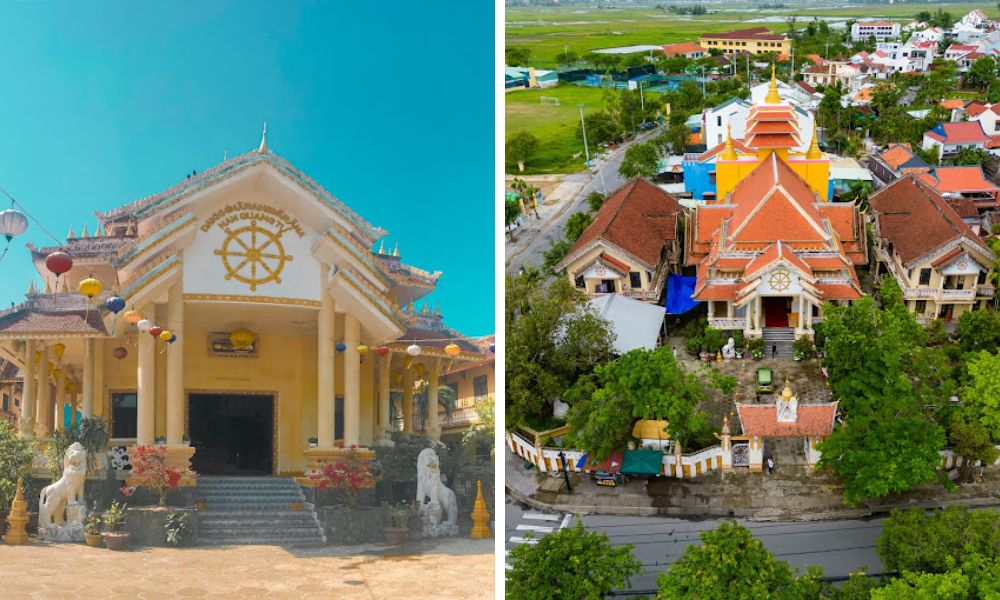
Figure 15. Nam Quang Tu Pagoda Hoi An
Highlights of Nam Quang Pagoda:
- Unique architecture: Nam Quang Pagoda makes a strong impression with the typical architecture of Nam Tong pagoda, with graceful curved arches, sophisticated decorative motifs and majestic Buddha statues.
- Peaceful space: Entering the pagoda, you will feel a quiet, peaceful space, very suitable for you to relax and find balance in your soul.
- Cultural activities: Nam Quang Pagoda is not only a place to pray but also a place to organize cultural activities and Buddhist festivals, creating opportunities for people to better understand Buddhist culture.
Why should you go to Nam Quang Pagoda?
- Discover unique architecture: Nam Quang Pagoda is one of the pagodas with the most beautiful and unique architecture in Hoi An.
- Experience the spiritual space: Pagoda is a place where you can find peace and relaxation in your soul.
- Learn about Buddhist culture: Through cultural activities at the pagoda, you will have the opportunity to understand more about Buddhist culture.
Things to note when going to the pagoda:
- Attire: You should wear polite, discreet clothing when entering the pagoda.
- Behavior: Need to maintain order, not make noise or affect people around.
- Time to visit: You can go to the pagoda at any time of the day, however, early morning or late afternoon is the best time to visit.
If you have the opportunity to come to Hoi An, don’t forget to visit Nam Quang Pagoda to explore a unique architectural and spiritual space.
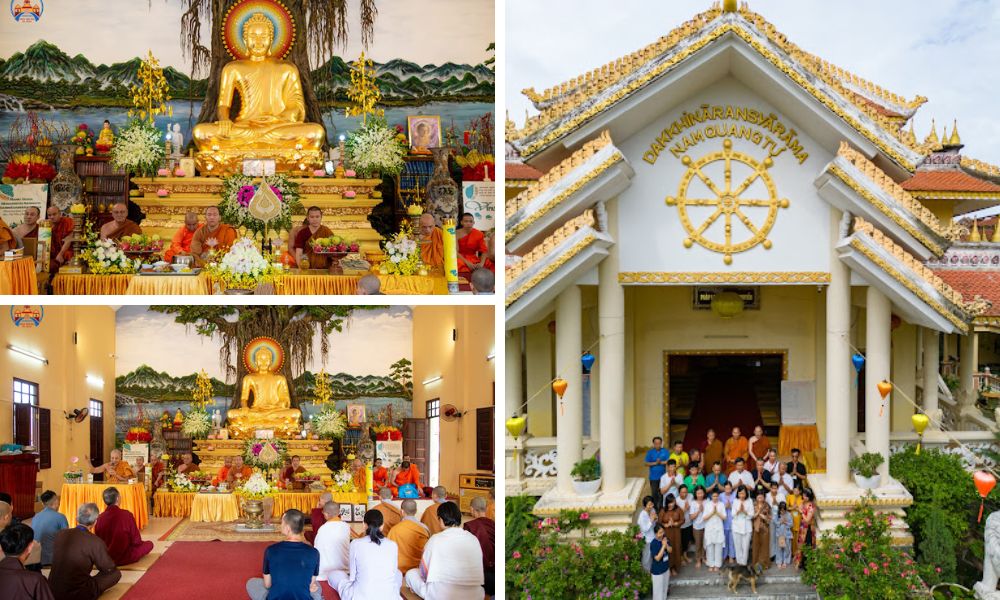
Figure 16. Some Buddhist teaching activities at Nam Quang Tu Pagoda in Hoi An
Hai Tang Pagoda – Sacred ancient pagoda nearly 300 years old on Cu Lao Cham island
- Address: located on Cu Lao Cham island
- Opening hours: 06:30 – 17:00
Located in Cu Lao Cham, Hoi An, Quang Nam, Hai Tang Pagoda is not only an ancient architectural work but also a unique cultural and spiritual symbol. The pagoda was built in 1758 and has many interesting historical stories.
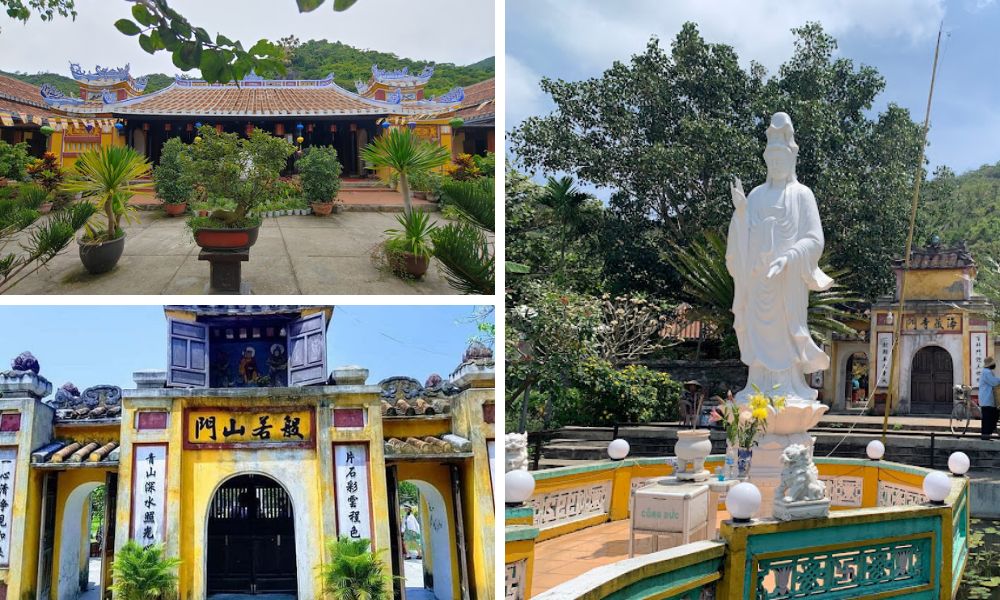
Figure 17. Hai Tang Pagoda
What makes Hai Tang Pagoda special?
- Thrilling legend: Hai Tang Pagoda is associated with the legend of merchants carrying wood visiting the island and being trapped by a storm. According to the gods, these trees must be used to build a pagoda to pray for a peaceful sea.
- Unique architecture: With ancient three-entrance gate, yin-yang tiled roof and surrounding stone walls, Hai Tang Pagoda has bold traditional Vietnamese architecture.
- Special “4 nos”: Hai Tang Pagoda is famous for its “4 nos”: no abbot, no votive papers, no electric lights and no monks. This creates a peaceful, peaceful space that is very different from other pagodas.
- Beautiful natural landscape: Located on Cu Lao Cham island, Hai Tang Pagoda is surrounded by beautiful natural scenery, with majestic mountains and blue sea and white sand.
Why should you go to Hai Tang Pagoda?
- Experience the spiritual space: Hai Tang Pagoda is the ideal place for you to find peace and relaxation in your soul.
- Explore traditional culture: The pagoda is an indispensable part of the cultural heritage of Vietnamese people.
- Admire the natural beauty: Cu Lao Cham is a beautiful island with many pristine beaches and diverse ecosystems.
Things to keep in mind when going to the pagoda
- Attire: You should wear polite, discreet clothes when going to the pagoda.
- Behavior: Avoid loud talking, laughing and disrespectful behavior.
- Environmental protection: Maintain general hygiene and do not litter.
Hai Tang Pagoda is a destination not to be missed when you come to Hoi An. Come here to enjoy the peaceful space and discover interesting things about Vietnamese culture and history.
Sharing the Latest and Detailed Experience of Visiting Hoi An Pagodas in 2024
To have a complete visit to the pagoda in Hoi An, here are some experiences that you should keep in mind:
Time to visit pagodas in Hoi An
- Suitable season: Hoi An has a tropical monsoon climate with two distinct seasons: rainy season (from September to December) and dry season (from January to August). The most ideal time to visit the pagoda is during the dry season, especially from February to April, when the weather is cool, there is little rain and the natural scenery is brilliant. You can refer to Hoi An Ancient Town: Four Endless Seasons, Thousands of Attractive Things.
- Time of day: It is recommended to visit the pagoda in the early morning or late afternoon. Early morning, the air is fresh and quiet, is the ideal time to feel the pure space of the pagoda. In the afternoon, the gentle sunset sunlight will create a very poetic scene.
Attire when visiting pagodas in Hoi An
- Attire: When going to the pagoda, you should wear discreet and polite clothes. Long-sleeved shirts, long pants and shoes that are easy to move in are reasonable choices. Avoid wearing short skirts, shorts or off-the-shoulder tops. You can check-in with Hoi An ao dai at the pagoda, please refer to it Ao Dai Rental Locations in Hoi An with many designs and reasonable prices.
- Things to bring: To make the trip more convenient, you should bring drinking water, an umbrella or hat to avoid the sun, and a camera to record beautiful moments.
Code of conduct
- Respect religious space: The pagoda is a sacred place, you should keep quiet and limit laughing and talking loudly. When visiting, please move gently, avoid disturbing those who are praying.
- Do not take photos in prohibited areas : Some areas in the pagoda do not allow photography. You should comply with these regulations to respect culture and beliefs.
- Make offerings properly: If you want to make offerings, do it properly. Avoid burning too much incense because this can affect the environment and the health of those around you.
Is it possible to take photos at pagodas in Hoi An?
Normally, you can take pictures of:
- In the space outside the pagoda: Many famous pagodas such as Cau Pagoda, Ba Mu Pagoda… allow visitors to take souvenir photos in the outside area, at corners with beautiful landscapes.
- In certain areas: Some pagodas may allow photography in clearly designated areas, without affecting the worship space.
However, you need to note:
- Ask for permission in advance: Before taking photos, you should ask for permission from the management board or pagoda caretaker for specific instructions.
- Do not take photos in prohibited places: There are areas in the pagoda such as places of worship, places of ceremonies… where photography is not allowed to ensure sanctity.
- Do not make noise or cause disorder: When taking photos, you should stay quiet and not make noise so as not to disturb those who are visiting or holding the ceremony.
- Respect culture and beliefs: Show respect for the culture and beliefs of local people when taking photos at the pagoda.
Advice:
- Find out information in advance: Before visiting a certain pagoda, you should find out information about that pagoda’s photography regulations to avoid unnecessary trouble.
- Choose the right shooting angle: Choose beautiful shooting angles that highlight the beauty of the pagoda’s architecture without affecting the sacred space.
- Take photos at the right time: Early morning or late afternoon are often ideal times to take photos at the pagoda, when the light is soft and the space is quiet.
In short, to take beautiful and meaningful photos at pagodas in Hoi An, you need to combine respecting pagoda regulations and choosing the right shooting angle.
Move between pagodas
- Bicycle: Hoi An has a small area, moving between pagodas by bicycle is the best way to experience the scenery and atmosphere here.
- Walking: If the pagodas you want to visit are located close to each other, walking is a good choice to both visit and enjoy the peaceful atmosphere of the old town.
Enjoy vegetarian cuisine
- Vegetarian restaurants: After visiting the pagoda, you can stop at some famous vegetarian restaurants in Hoi An to enjoy frugal vegetarian cuisine. The food here is not only delicious but also very good for your health and don’t forget to check in to these ‘Hidden’ Coffee Shops in the Middle of Hoi An’s Old Town That Are Awesome for You to Live Virtually or you can immerse yourself in the peaceful, well-decorated space of these Hoi An Tea Room: A Destination Bringing the Taste of Vietnamese Tea Immersed in a Traditional Cultural Space.
Shopping and making souvenirs
- Handicraft products: Hoi An is famous for its handicraft products. After visiting the pagoda, you can stop by the nearby souvenir shops to buy some gifts such as ceramics, silk, or wooden decorations.
Learn the history and meaning
- Local tour guide: If you want to gain a deeper understanding of the history and significance of the pagodas, you should hire a local tour guide. They will help you gain more insight into the stories and myths surrounding the pagodas.
Note about safety
- Property preservation : When visiting the pagoda, always pay attention to preserving personal property, especially in crowded areas.
- Health : If you have a history of cardiovascular or respiratory diseases, you should limit climbing high stairs and always carry personal medication.
A visit to the pagodas in Hoi An is not only an opportunity to learn about history and culture, but also helps you find peace in your soul. Hope the above experiences will help you have a great trip Hoi An tourism memorable in 2024. Please refer to our Hoi An travel plans now to help you save time and not miss beautiful locations:
- Hoi An Travel Cost 3 Days 2 Nights: Detailed Experience For The Perfect Trip
- Schedule and Hoi An Travel Costs 2 days 1 night Is Reasonable But Extremely Interesting
- Pocket Latest Self-sufficient Hoi An Travel Experience 2024: What to Eat, Where to Stay, What to Play?

Cập nhật lần cuối: 26/09/2024 08:58

 Vietnam
 Korea
Korea